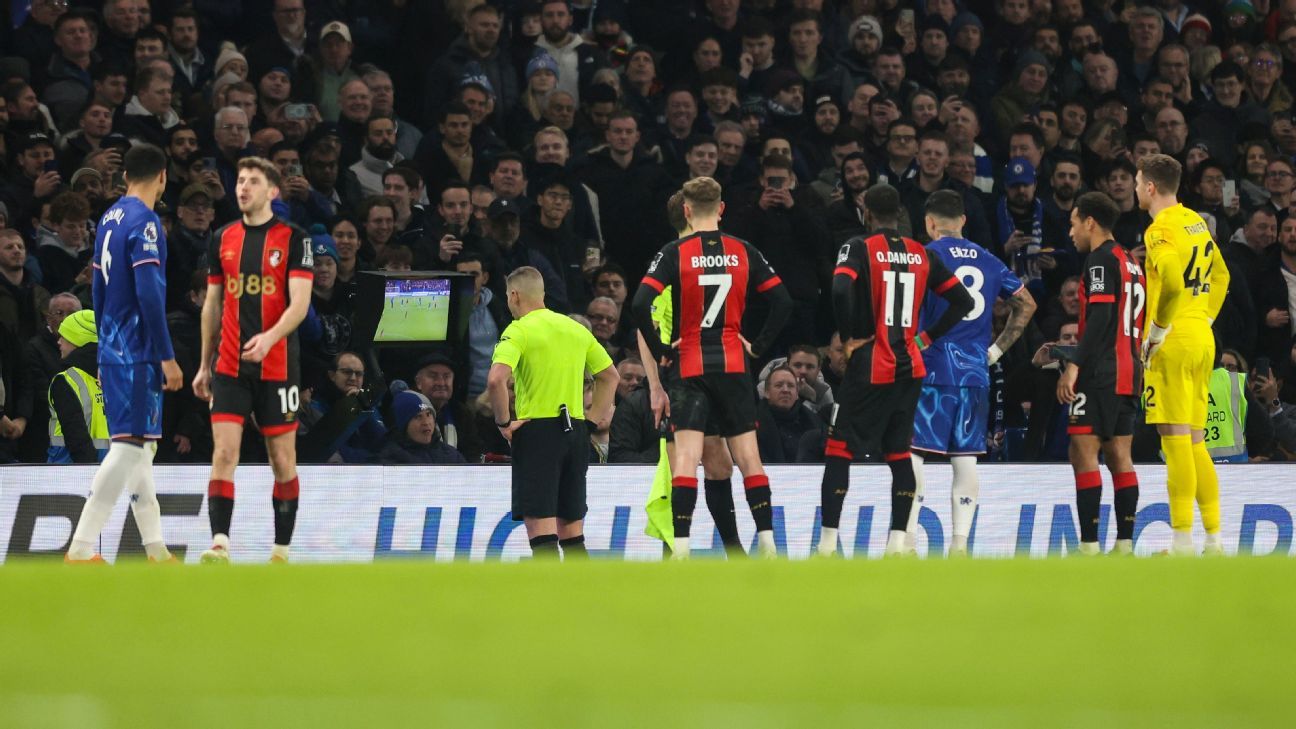
Chelsea’s VAR Controversy: The Brooks Red Card Debate
The recent VAR decision that denied Chelsea a crucial red card against Bournemouth has ignited a firestorm of debate among fans, analysts, and sports commentators. The decision not only affected the outcome of the match but also raised questions about the consistency and reliability of VAR in football. This article delves deep into the implications of the Brooks red card controversy, examining its impact on Chelsea, Bournemouth, and the broader football community.
The Incident: A Closer Look at the Brooks Challenge
During the match held on a chilly afternoon, Bournemouth’s midfielder, David Brooks, made a challenge that many believed warranted a red card. The incident occurred in the first half, with Brooks tackling Chelsea’s player, who was making a promising run towards goal. The challenge was deemed reckless by many viewers, leading to immediate calls for a review by the VAR officials.
As the match progressed, the referee opted not to penalize Brooks with a red card, a decision that left players and fans alike in disbelief. Chelsea’s supporters were particularly vocal, arguing that Brooks’ challenge was dangerous and met the criteria for a straight red card, which should have led to his expulsion from the match.
The Role of VAR: Scrutinizing Its Effectiveness
The introduction of Video Assistant Referee (VAR) technology was meant to enhance the accuracy of officiating decisions in football. However, the Brooks red card incident has brought the effectiveness of VAR into question. Critics argue that despite its presence, the system fails to deliver consistent and just outcomes. Here are some key points regarding the effectiveness of VAR:
- Subjectivity of Decisions: VAR relies on human interpretation of incidents, which can lead to inconsistencies. What one referee sees as a foul, another may overlook.
- Delay in Decision-Making: The time taken to review incidents sometimes disrupts the flow of the game and can frustrate players and fans.
- Lack of Transparency: Fans often feel left in the dark regarding the reasoning behind VAR decisions, which can fuel outrage and confusion.
The Fallout: Reactions from Players, Coaches, and Fans
The reactions to the Brooks incident were swift and intense. Chelsea’s head coach expressed his frustration with the decision, emphasizing the need for clarity and consistency in officiating. Players from both teams had their say as well, with Chelsea’s captain vocally advocating for a fairer interpretation of the rules.
On social media, fans voiced their outrage, with many calling for reforms to the VAR system. Hashtags like #JusticeForChelsea trended as supporters rallied around their team, emphasizing that the integrity of the game was at stake. The frustration over the Brooks challenge extended beyond Chelsea fans; many neutral observers expressed concern about how such decisions could impact the league’s fairness.
The Broader Implications for Chelsea and Bournemouth
The decision not to send Brooks off had significant implications for both teams. For Chelsea, the inability to capitalize on a potentially advantageous situation could affect their standing in the league. Points dropped in crucial matches can lead to missed opportunities for European competition and affect player morale.
On the other hand, Bournemouth benefited from the decision, allowing them to maintain their defensive structure without the burden of playing a man down. This could be pivotal for their aspirations to avoid relegation, making the outcome of the match even more critical for their season.
Comparative Analysis: Similar VAR Controversies
Chelsea’s VAR controversy is not an isolated incident. Over the past few seasons, various high-profile matches have been marred by contentious VAR decisions. For example, the infamous handball rule has often led to contentious penalties, while other questionable red card decisions have sparked uproar among fans. Here are a few notable VAR controversies:
- The 2020 FA Cup Final: A disallowed goal for Arsenal due to a marginal offside decision raised eyebrows and highlighted the fine margins at which VAR operates.
- The 2021 Premier League Season: Numerous matches featured contentious red card decisions, leading to calls for reassessment of the rules governing dangerous play.
- International Tournaments: The use of VAR in the FIFA World Cup and UEFA European Championship has also faced scrutiny, with several key decisions leading to widespread debate.
Looking Ahead: The Future of VAR in Football
The controversy surrounding Chelsea’s VAR decision regarding Brooks has reignited discussions about the future of technology in football. While VAR aims to improve the accuracy of officiating, it is clear that adjustments are necessary to enhance its effectiveness. Potential reforms could include:
- Clearer Guidelines: Establishing more precise definitions of fouls and dangerous plays could help referees make better decisions.
- Improved Communication: Enhancing the communication between referees, VAR officials, and fans could increase transparency and reduce frustration.
- Training and Education: Ongoing training for officials on the use of VAR technology and its application in various scenarios could lead to more consistent outcomes.
Conclusion: A Call for Change
The Brooks red card debate encapsulates the ongoing struggle between technology and human interpretation in football officiating. While VAR was introduced to eliminate clear errors, this incident illustrates that the system is not foolproof and that improvements are needed. As fans, players, and analysts continue to voice their concerns, it is vital that governing bodies take these insights seriously. The integrity of the game depends on fair and just officiating, and the time for change is now.
Chelsea’s VAR controversy serves as a reminder that the beautiful game is constantly evolving. As we look to the future, it is essential to embrace innovation while ensuring that the core values of fairness and integrity remain at the forefront of football.
See more Sky News Portal