Tensions Rise: Marcus Freeman’s Reaction to James Franklin’s Hair Remarks
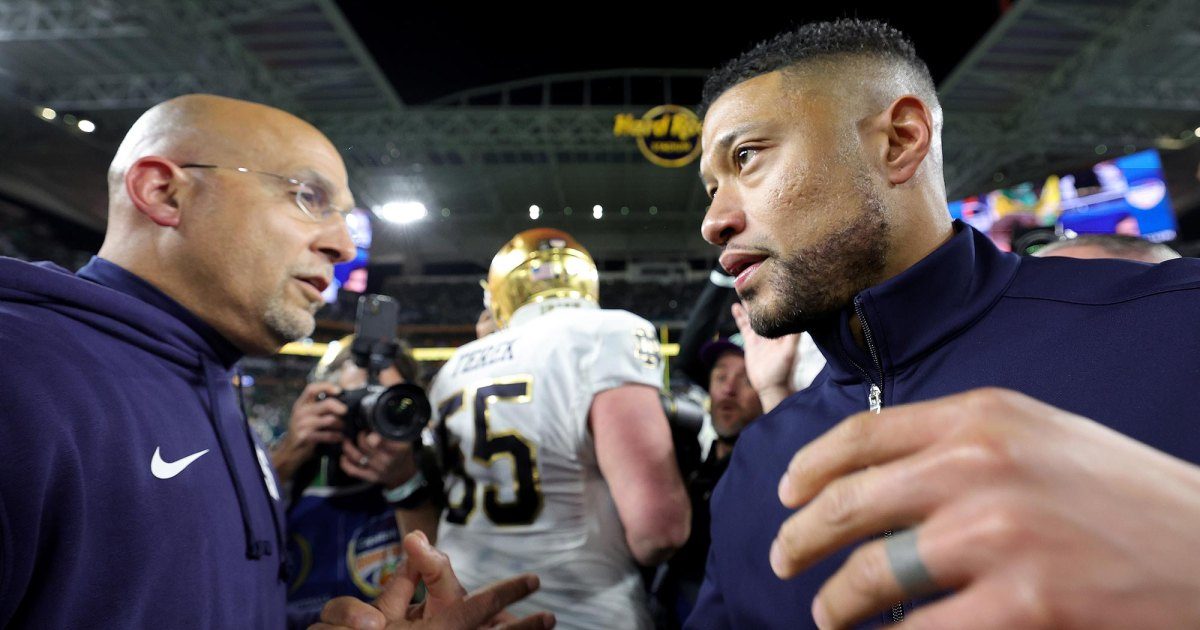
In the world of college football, where rivalries run deep and emotions often flare, a recent incident has ignited a new conversation about the balance between humor and professionalism in coaching. Notre Dame’s head coach, Marcus Freeman, expressed his frustration over a seemingly lighthearted comment made by Penn State’s coach, James Franklin, regarding Freeman’s hair. This unexpected exchange has sparked discussions not only about the remarks themselves but also about the broader implications for sportsmanship and the culture within college football.
The Incident: A Hair Joke Gone Awry
During a pre-game press conference, James Franklin made a playful comment about Marcus Freeman’s hairstyle, suggesting that it was “a little different” and poking fun at the coach’s grooming choices. While Franklin likely intended the remark to be humorous, it did not land well with Freeman, who took offense to the implications behind the joke. In his response, Freeman articulated his disappointment, emphasizing that jokes about appearance can perpetuate negative stereotypes and distract from the serious nature of coaching and competition.
Freeman’s reaction was not just a personal grievance; it echoed a sentiment shared by many in the sports community who believe that comments regarding one’s appearance, even when made in jest, can cross a line. This incident serves as a reminder that in the high-stakes environment of college sports, where every word can be scrutinized, coaches must navigate the delicate line between camaraderie and respect.
Understanding the Context: Coaches and Public Perception
Coaches are often viewed as role models and leaders, not just for their players but also for their communities. Every public appearance, press conference, or social media post contributes to their image and the image of their programs. When coaches engage in banter, it can sometimes reflect poorly on their professionalism. The incident between Freeman and Franklin highlights the scrutiny coaches face regarding their public personas.
Moreover, the dynamics of a press conference can be tricky. Coaches often feel the pressure to be entertaining and engaging, which can lead to comments that may be seen as inappropriate or offensive. In this case, Franklin’s attempt at humor backfired, leading to a situation that could have been avoided with more thoughtful communication.
Marcus Freeman’s Perspective: The Importance of Respect
Marcus Freeman’s response to Franklin’s remarks was rooted in a desire for respect within the coaching profession. He emphasized that while humor has its place, it should not come at the expense of another person’s dignity. Freeman’s commitment to respect is evident in his coaching philosophy, which prioritizes building character in his players alongside developing their athletic skills.
Freeman’s reaction also reflects a broader trend in sports culture, where athletes and coaches alike are increasingly vocal about the importance of mental health and emotional well-being. Comments that may seem innocuous can have unintended consequences, particularly in an environment where young athletes are already navigating significant pressures. Freeman’s stance serves as a call to action for coaches to be more mindful of their words and the impact they can have on others.
The Role of Humor in Sports: A Double-Edged Sword
Humor plays a crucial role in sports, often used to build team chemistry and relieve tension. However, it can also be a double-edged sword. While lighthearted banter can foster camaraderie, it can also alienate or offend others if not executed thoughtfully. The key lies in understanding the audience and the context of the jokes being made.
- Building Team Spirit: Humor can break the ice and help players bond, creating a positive team environment.
- Relieving Pressure: Laughter can lighten the mood before big games, helping players to relax and perform better.
- Risk of Misinterpretation: Jokes can easily be taken out of context, leading to misunderstandings and hurt feelings.
In light of the Freeman-Franklin incident, coaches might want to reevaluate their approach to humor. Finding ways to connect with players and colleagues through shared experiences and respectful dialogue can foster a more inclusive and supportive atmosphere.
The Broader Implications for Sportsmanship
The exchange between Freeman and Franklin has broader implications for the culture of sportsmanship in college football. As the landscape of athletics evolves, so too does the expectation for coaches to model appropriate behavior. Incidents like this one can serve as teachable moments, encouraging discussions about respect, empathy, and the impact of our words.
Coaches are in a unique position to influence young athletes, not just in terms of their skills on the field but also in their interactions off the field. By advocating for respectful communication and understanding, coaches can help cultivate a generation of athletes who recognize the importance of integrity and consideration in all aspects of their lives.
Moving Forward: Lessons Learned
As the dust settles on this incident, both Marcus Freeman and James Franklin can take away valuable lessons. For Freeman, it reinforces the need for coaches to advocate for a respectful and professional environment. For Franklin, it serves as a reminder that even seemingly harmless jokes can have unintended consequences. In the end, the incident highlights the importance of thoughtful communication in fostering a positive sports culture.
Ultimately, while humor can enrich the coaching experience, it is crucial to wield it responsibly. The focus should always remain on the core values of the sport: respect, fairness, and the pursuit of excellence, both on and off the field. As coaches navigate the complexities of their roles, they must remember that their words carry weight, and the impact can last far beyond a single press conference.
In conclusion, the tensions that arose from Marcus Freeman’s reaction to James Franklin’s hair remarks have sparked an important conversation about sportsmanship and respect within the realm of college football. As the landscape continues to evolve, embracing a culture of respect and consideration will serve to elevate the sport and its players, coaches, and fans alike.
See more Sky News Portal